
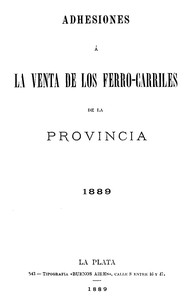
Adhesiones á la Venta de los Ferro-carriles de la Provincia by Manuel B. Gonnet
Manuel B. Gonnet’s book is a fascinating primary source, not a traditional narrative. It’s a compiled record of the public debate surrounding a major government decision in late 19th-century Argentina: the proposed sale of the province’s railways to private interests. The title, which translates to 'Adhesions to the Sale of the Provincial Railways,' is your clue. Gonnet gathered the official statements—the 'adhesions'—from municipalities, civic groups, and prominent citizens who supported the privatization.
The Story
The 'plot' is the political battle itself. Argentina was rapidly expanding, and its railroads were the lifeblood of that growth. The government owned key lines, but running them was expensive. The proposal was to sell them off. Gonnet’s work presents one side of that argument, showcasing the organized, public campaign in favor of the sale. Through these documents, you see the promises made: that private capital would lead to more efficient service, expanded lines, and less strain on public funds. It’s a snapshot of a nation debating its economic soul, captured in formal letters and resolutions.
Why You Should Read It
This book is special because it lets you listen in on the past. You’re not getting a historian’s summary written a century later; you’re reading the exact words people used to persuade their neighbors and their government. The themes are instantly recognizable—public vs. private control, faith in market forces, the tension between immediate fiscal relief and long-term public ownership. It shows how political movements build momentum through organized public endorsement. Reading it, you can’t help but draw parallels to modern debates about infrastructure and privatization.
Final Verdict
This is a niche but rewarding read. It’s perfect for history buffs who are tired of textbooks and want to touch the raw material of history, and for anyone interested in the political and economic foundations of modern Latin America. It’s not a beach read, but for the curious mind, it’s like finding a secret file of political strategy. You’ll need some patience for the 19th-century formal language, but the payoff is a genuine, unvarnished look at how a country made a monumental choice.
This historical work is free of copyright protections. Preserving history for future generations.
Margaret Garcia
1 year agoGreat read!
Patricia Hernandez
1 year agoFast paced, good book.
Matthew Torres
1 year agoText is crisp, making it easy to focus.






Sandra Flores
8 months agoWow.