
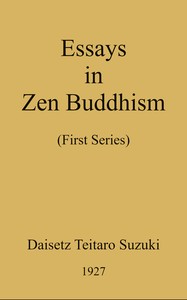
Essays in Zen Buddhism : First series by Daisetz Teitaro Suzuki
Let's be clear: this is not a storybook. There's no protagonist, no villain, and no three-act plot. Instead, D.T. Suzuki, a scholar who spent his life bridging East and West, lays out a map of Zen Buddhist thought. He starts by wrestling with the impossible task of defining Zen, showing how it deliberately escapes easy labels. The 'story' here is the historical and philosophical journey of Zen from its origins in China to its cultural impact.
The Story
Suzuki structures his essays like a series of connected lectures. He introduces core concepts like satori (a sudden moment of awakening or understanding) and explores the purpose of those famous, frustrating koans. He doesn't just tell you about them; he walks you through examples, like a teacher showing a student how to approach a complex math problem. A big part of the narrative is showing how Zen isn't about blind belief or complex rituals, but about a direct, personal experience of reality. He uses stories of ancient masters, analyzes Zen's relationship with other schools of Buddhism, and paints a picture of a tradition built on paradox and practical insight.
Why You Should Read It
I'll be honest, some passages made my brain hurt. But in the best way. Reading Suzuki is like getting a software update for your mind. He challenges the very foundation of how we process information—our reliance on dualistic thinking (good/bad, self/other). What stuck with me wasn't a religious conversion, but a new lens. Now, when I'm stuck on a problem or overwhelmed, I sometimes remember his explanations. It's not about 'emptying your mind,' but about seeing the mind's activity from a different angle. This book gave me a vocabulary for experiences that felt beyond words.
Final Verdict
This is not for someone looking for a quick self-help fix or a simple introduction to Buddhism. It's a foundational text. It's perfect for the curious thinker, the philosophy dabbler, the person who enjoys a deep, slow read that challenges their assumptions. If you've ever been intrigued by mindfulness, meditation, or just want to understand a perspective that has influenced artists, philosophers, and psychologists for decades, start here. Suzuki is your original guide. Be prepared to read some paragraphs twice, sit with the ideas, and maybe see the world—and your own thoughts—a little differently.
This title is part of the public domain archive. Enjoy reading and sharing without restrictions.
John King
3 months agoWow.
Matthew Garcia
11 months agoHaving read this twice, the storytelling feels authentic and emotionally grounded. A true masterpiece.
Sarah Clark
4 months agoClear and concise.
Lisa Thompson
1 year agoI came across this while browsing and the character development leaves a lasting impact. Highly recommended.







Patricia Sanchez
1 month agoHaving read this twice, the clarity of the writing makes this accessible. This story will stay with me.