
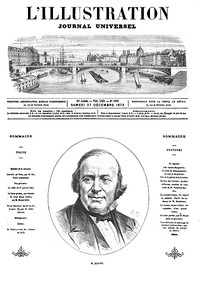
L'Illustration, No. 1609, 27 décembre 1873 by Various
Forget everything you know about modern media. L'Illustration was the Instagram, the CNN, and the National Geographic of its day, all rolled into one lavish weekly publication. This specific issue, dated December 27, 1873, is a snapshot of a world in flux. We're not following a novel's plot, but the 'plot' of history itself.
The Story
There's no protagonist, unless you count France itself. Flipping through the pages is like attending a grand, slightly chaotic salon. One moment you're examining an intricate engraving of the nearly completed Palais Garnier (the Paris Opera House), a symbol of the city's rebirth. The next, you're looking at a political cartoon that might mock the ongoing debates in the National Assembly. There are reports from abroad, fashion plates showing what wealthy Parisians were wearing for the holidays, and even serialized fiction. The 'story' is the collective experience of a society looking forward to 1874, still processing the trauma of war and the Paris Commune, and trying to figure out what comes next.
Why You Should Read It
This is history without the filter of a textbook. It's raw, immediate, and surprisingly human. The ads for champagne and newfangled sewing machines sit right beside sober analysis of European politics. You get a real sense of what mattered to people, what they found beautiful, and what made them laugh or worry. The engravings are artworks in their own right—the primary way most people would ever 'see' a foreign country or a major event. Reading it makes you realize how much we've gained in speed and access with modern media, but perhaps lost in depth and tangible artistry. It’s a quiet, fascinating reminder that people in the past weren't just dates in a timeline; they were reading the paper over breakfast, too.
Final Verdict
This isn't for someone looking for a page-turning novel. It's perfect for history buffs who want to move beyond facts and feel the texture of an era, for art lovers fascinated by printmaking, or for anyone with a deep curiosity about how people lived and thought. It requires a bit of patience and imagination, but the reward is a uniquely direct connection to the past. Think of it as the most detailed, immersive history documentary you've ever seen, but in paper form.
The copyright for this book has expired, making it public property. It is available for public use and education.
Steven White
7 months agoBeautifully written.
Edward Davis
9 months agoI have to admit, it provides a comprehensive overview perfect for everyone. Highly recommended.


Noah King
1 year agoBeautifully written.